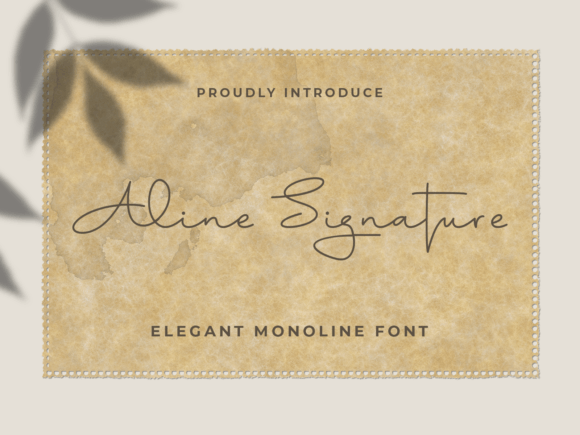
Aline Signature: A Modern Handwritten Font for Creative Projects
Finding a script font that feels both personal and professional can be a real challenge. You want something with character, but it can't be so casual that it undermines your message. This is where Aline Signature enters the conversation. Created by the team at Kong Font Studio, this typeface offers a beautiful balance of elegance and playful energy. It’s a modern handwritten font that feels like it was crafted by a confident hand, not generated by a machine. For designers, entrepreneurs, and creatives, it’s a valuable addition to any collection of design assets.
The Visual Personality of Aline Signature
At its core, Aline Signature is a display font designed to make a statement. Its visual style is defined by smooth, flowing strokes and a natural, connected script. Unlike more formal calligraphy fonts, it has a relaxed confidence. The letterforms have a slight slant and varied baseline, which mimics the authentic look of real handwriting. This prevents it from looking stiff or overly technical. The overall appeal lies in its versatility; it’s elegant enough for wedding invitations yet modern enough for a social media brand. It’s a premium font that avoids the common pitfalls of many script typefaces, which can often look dated or hard to read.
When you examine it closely, you’ll notice the thoughtful design. The connections between letters feel organic, and the weight of the strokes provides good readability at various sizes. It’s a creative font that carries personality without shouting. This makes it a strong contender for projects where you need to inject warmth, authenticity, or a touch of sophistication. Think of it as the font equivalent of a well-designed piece of stationery—it immediately sets a certain tone.
Where This Handwritten Font Truly Shines
The real test of any typeface is how it performs in the wild. Aline Signature proves its worth across a surprising range of applications, making it a practical choice for many professionals. Let’s break down where it works best.
In brand identity, this font can be a secret weapon. It’s excellent for creating logos for lifestyle brands, boutique studios, cafes, or personal blogs where a human touch is essential. It helps establish a brand perception that is approachable, creative, and trustworthy. However, it’s crucial to use it thoughtfully. As a script font, it’s rarely the best choice for body text. Instead, pair it with a clean sans serif font or a classic serif font for paragraphs. This creates a strong visual hierarchy, using Aline Signature for headlines, pull quotes, or brand names to draw the eye.
For marketing and social media graphics, its value is clear. It can make Instagram posts, Facebook ads, and Pinterest pins stand out in a crowded feed. The font’s playfulness can make a call-to-action feel more inviting or a quote more impactful. In packaging design, it’s ideal for artisan products, cosmetics, or gourmet goods, where the label needs to convey quality and craftsmanship. The same principle applies to editorial design; it can add flair to magazine headings, chapter titles, or book covers without overwhelming the main content.
For crafters and hobbyists, its compatibility with tools like Silhouette Design Studio and Photoshop is a major plus. It’s perfect for creating custom invitations, greeting cards, tote bag designs, and vinyl decals. The font’s fluid lines cut well and maintain their integrity, which is a practical consideration often overlooked.
Making Smart Choices with Aline Signature
Adopting a new font is more than just liking how it looks; it’s about evaluating its fit for your specific project. Here’s some practical guidance on working with Aline Signature effectively.
First, always consider the context. Ask yourself: what is the primary goal of this design? If you’re designing a legal document or a technical manual, this is not your font. But if you’re building a brand for a wedding photographer, a bakery, or a lifestyle coach, it could be perfect. Its strength is in conveying emotion and style, not in conveying dense, factual information.
Font pairing is non-negotiable. Aline Signature, like any strong display font, needs a supporting cast. For a balanced design, pair it with a highly legible, neutral typeface. A geometric sans serif like Montserrat or a humanist sans serif like Lato can provide a clean, modern counterpoint. For a more classic, editorial feel, a transitional serif like Georgia or a modern serif like Playfair Display can work beautifully. The key is contrast: let the script font be the star, and let the other font play a supporting role.
Test for readability. While it’s quite legible for a script font, always test it at the size and in the context it will be used. Check how it looks on both a bright computer screen and printed on textured paper. Pay attention to letter spacing, especially if you’re using it for a logo where each letter needs to be clear.
Finally, understand the licensing. Aline Signature is a commercial font available through sources like Creative Fabrica. For any project that will be sold—whether a physical product like a t-shirt or a digital product like a template—you need to ensure you have the correct commercial license. This is a critical step for any professional or small business owner to avoid legal issues down the line.
A Final Thought on Integrating This Typeface
Ultimately, Aline Signature is a tool for adding a layer of human connection to your designs. It’s not a magic solution for every problem, but in the right situation, it can elevate a project from generic to memorable. Its modern typography sensibility means it feels current, not trendy. By using it strategically—as a highlight rather than a foundation—you can leverage its strengths to build stronger brand recognition, create more engaging content, and add a professional polish to your creative work. It’s a reminder that the best design assets are those that serve a clear purpose while adding a distinct voice.