Cute Dog: The Playful Font for Pet & Kid Brands
There’s a particular challenge in design work that targets families, pet owners, or a youthful demographic. You need typography that conveys warmth and approachability without looking unprofessional or childish. Too often, designers default to generic comic sans or overly stiff serif fonts, missing the mark entirely. If you are working on a project that requires a heartbeat—a sense of genuine affection and playfulness—you need a typeface that speaks that specific language. This is where Cute Dog enters the conversation, not just as a novelty, but as a functional display font with a distinct personality.
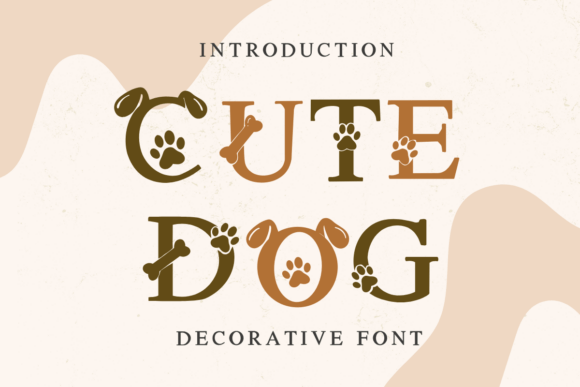
At its core, Cute Dog is a handwritten font that integrates whimsical, pet-themed elements directly into the letterforms. You won’t just see standard strokes; you will find charming details like floppy ears on the serifs, bones tucked into the curves, and paw prints integrated into the terminals. It is a creative font designed to evoke an instant emotional response. However, using a highly stylized typeface like this requires a strategic approach. You have to balance its inherent playfulness with the need for legibility and brand consistency. Whether you are a small business owner branding a grooming salon or a content creator designing merchandise, understanding how to deploy this premium font effectively is key to a successful design.
Visual Personality and Design Characteristics
When you analyze Cute Dog, the first thing you notice is the organic flow. It mimics the spontaneous energy of a puppy, but it is crafted with enough precision to function as a commercial font. The visual weight is generally medium, making it versatile enough for both light and dark backgrounds. Unlike a rigid sans serif font, this typeface has a tactile quality. It feels hand-drawn, which instantly softens the tone of any layout. This is crucial for brand identity work where you need to establish trust and friendliness immediately.
The character set includes standard uppercase and lowercase letters, but the magic lies in the alternates and ligatures. These features allow designers to mix and match styles, ensuring that the text doesn't look repetitive or robotic. For example, the tail of the letter 'Q' might curl like a dog's tail, or the dot on the 'i' could be a small heart or bone. These details are what separate a standard script font from a thematic asset like Cute Dog. It provides a narrative element to the typography, suggesting that there is a story behind the words.
Strategic Applications: Where to Use Cute Dog
Knowing where to apply a creative font is just as important as having it. Cute Dog shines in environments where you need to capture attention quickly and convey a specific mood. It is not a serif font for long-form body copy in a legal document; it is a tool for impact.
Branding and Logo Design
For entrepreneurs in the pet industry—veterinarians, dog walkers, pet bakeries, or boutique groomers—this font is a natural fit for logo design. It does a lot of the heavy lifting regarding personality. However, a word of advice from a brand strategist: ensure your logo remains scalable. While Cute Dog looks great on a storefront sign, check that the smaller details (like the bone motifs) remain visible when scaled down for a business card or a social media avatar.
Publishing and Editorial Design
In editorial design, specifically for children’s books or family-oriented magazines, Cute Dog works beautifully for chapter titles, pull quotes, or cover headlines. It breaks the monotony of standard modern typography and draws the eye. If you are a publisher creating a series of early readers, this font establishes a consistent visual identity that children will recognize and feel comfortable with.
Digital and Print Marketing
For marketers and content creators, the digital landscape is crowded. Social media graphics need to stop the scroll. Using Cute Dog in Instagram stories, Pinterest pins, or YouTube thumbnails can add a layer of relatability that standard fonts lack. It is also excellent for packaging design for products like organic dog treats or kids' snacks. The font suggests that the product inside is fun and approachable.
Technical Considerations and Best Practices
Adopting a new typeface into your workflow requires more than just installation. To maintain professionalism, you must consider how Cute Dog interacts with other design assets.
Font Pairing Strategies
The golden rule of font pairing is contrast. Because Cute Dog is a highly decorative, handwritten style, pairing it with another script or highly stylized font will result in visual chaos. Instead, anchor it with a clean, geometric sans serif font. A font like Montserrat, Roboto, or Open Sans provides the breathing room needed for the Cute Dog headlines to pop. Use the decorative font for headers and the sans serif for body text to ensure your message is actually readable.
Readability and Visual Hierarchy
While Cute Dog is legible for short bursts of text, avoid using it for paragraphs. The intricate details that make it charming can cause eye strain in large blocks of text. This is a common pitfall with display fonts. Respect the visual hierarchy; let the font do the job of grabbing attention, and let a more neutral font handle the heavy lifting of information delivery.
Licensing and Usage
Before finalizing a project, always verify the licensing. As a premium font, Cute Dog typically comes with a license that covers specific usage types. If you are creating brand identity materials for a client, ensure your license covers commercial use. If you are creating print-on-demand t-shirts or merchandise, check if the license covers the number of prints or if an extended license is required. Treating fonts as proper assets protects your business and the type designer.
Elevating Your Creative Projects
In a world saturated with generic minimalism, Cute Dog offers a breath of fresh air. It allows designers, crafters, and hobbyists to inject personality into their work without sacrificing structure. It bridges the gap between a casual handwritten font and a functional design tool.
Whether you are designing a flyer for a local adoption event, creating a header for a pet blog, or branding a new line of children’s apparel, this font provides the warmth and character needed to connect with your audience. It is a reminder that typography is not just about reading; it is about feeling. By integrating Cute Dog into your toolkit, you are equipping yourself to create designs that are not only seen but remembered.